
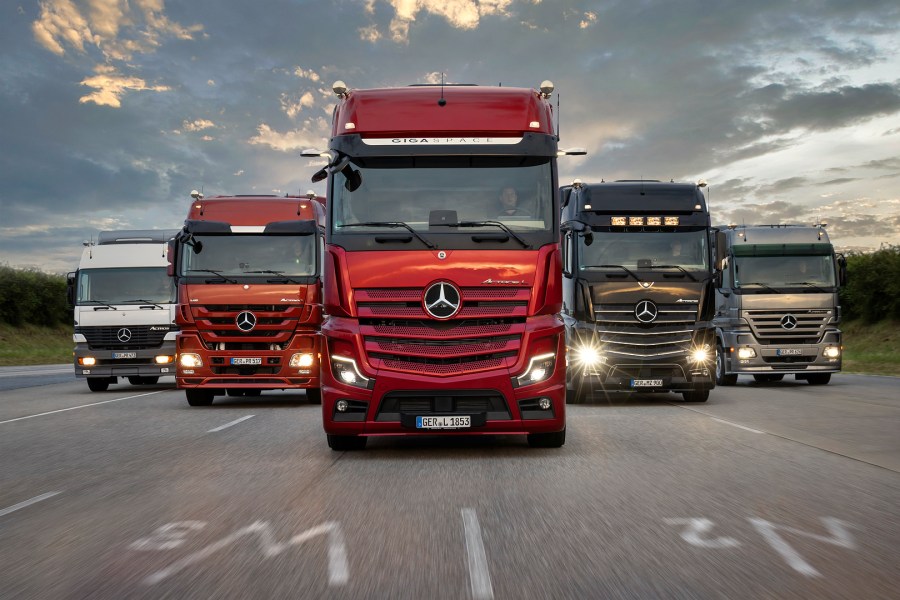
In 1996, Mercedes-Benz Trucks introduced a new name to the heavy-duty world. Thirty years later, Actros has become one of the defining trucks of its generation. But its story isn’t really about a truck. It’s about the people who drive them.
There are some trucks you remember, not necessarily because of a particular specification or horsepower figure, but because of what they represented. A new chapter. A new way of doing things. A truck that arrived and made you realise the road ahead was going to look different.
For Mercedes-Benz Trucks, that truck was Actros.
When the first Actros appeared in 1996, it represented a significant step forward in heavy-duty transport. Electronically controlled disc brakes were fitted as standard, the Telligent braking system brought a new approach to active safety, while a central CAN-bus network allowed the truck’s electronic systems to communicate with each other. It was a glimpse of where trucking was heading, and the industry took notice. Just a year after its launch, Actros was named International Truck of the Year.
Thirty years later, that spirit of progress remains at the heart of the name.
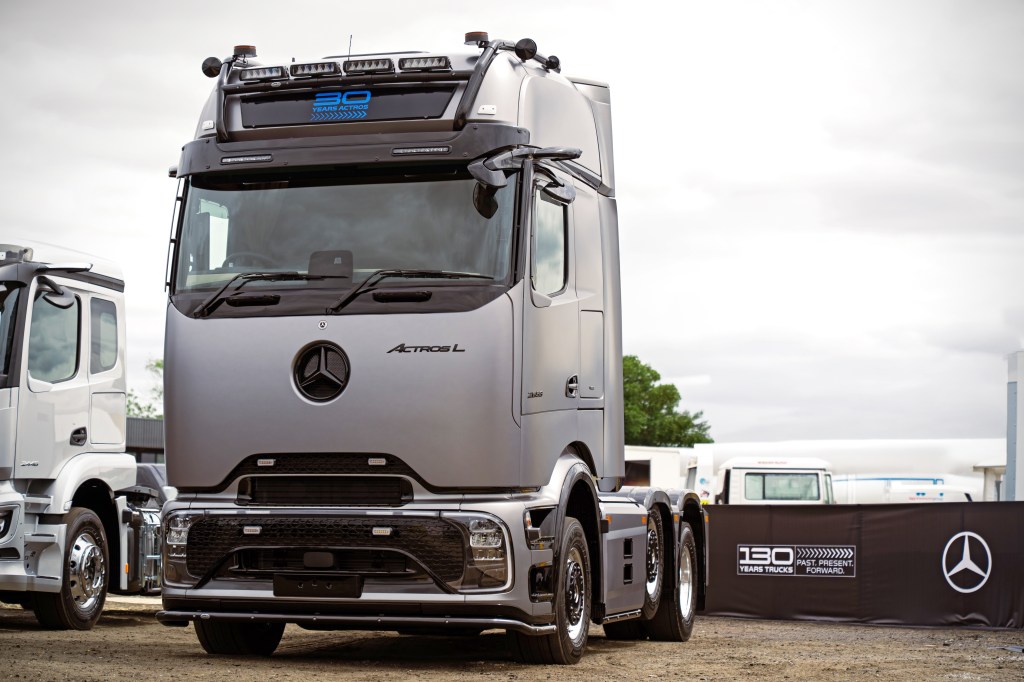
Evolving with the people behind the wheel
The world of trucking has changed almost beyond recognition since 1996, and Actros has evolved with it. Successive generations have introduced advances in automated shifting, driver assistance, efficiency and connectivity, continually changing what drivers can expect from a modern heavy-duty truck.
The introduction of technologies such as Adaptive Cruise Control and Lane Keeping Assist brought a new level of support to long-distance driving, while Active Brake Assist, introduced in 2006, represented another major step forward in truck safety. It was a powerful demonstration of a principle that has run throughout the Actros story: technology is at its most valuable when it works for the driver.
As the years passed, the truck became increasingly connected. Telematics and fleet management systems created new ways for the vehicle, driver and operator to communicate, turning the truck into an increasingly intelligent part of the wider transport operation.
Yet for all that technology, one thing has never changed. Someone still has to drive it.
A professional driver still climbs into the cab before sunrise, faces the traffic and the weather, manages the pressures of a delivery schedule and spends hour after hour behind the wheel. That is why the technology in a truck ultimately matters only when it makes the driver’s working life safer, easier and more productive.
Safety matters because there is a driver behind the wheel. Comfort matters because that driver may spend days away from home. Visibility matters because every junction, roundabout and lane change matters. Efficiency matters because every mile adds up, and reliability matters because when the truck is your workplace, you need to know it will do the job.
That human side of trucking is easy to lose when we talk about innovation, but it is arguably the most important part of the Actros story.
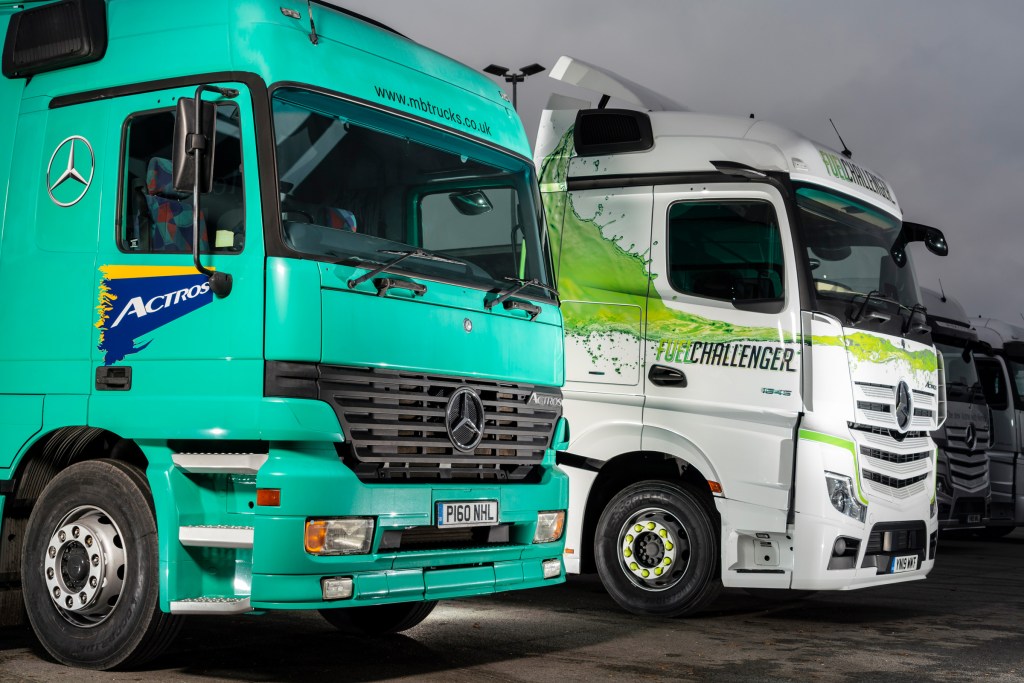
Thirty years of moving with the times
The fourth-generation Actros, launched in 2012, continued the development of efficiency, safety, comfort and connectivity, and once again the industry recognised the progress by naming it International Truck of the Year.
Then came another significant chapter in 2019.
The fifth-generation Actros brought digitalisation even further into the driving experience. The Multimedia Cockpit created a new interface between driver and truck, while MirrorCam introduced camera technology in place of conventional exterior mirrors on equipped vehicles. Advanced driver assistance systems continued to develop, with Active Drive Assist helping support the driver in maintaining the truck’s position within its lane.
Once again, Actros received the industry’s highest accolade, being named International Truck of the Year 2020 – its fifth victory in the award’s history.
But perhaps the more important measure of success happened away from the awards ceremonies.
Drivers got behind the wheel and went to work.
They took Actros trucks across motorways and mountain passes, into cities and down country roads. They hauled food, machinery, components, building materials and countless other loads that keep modern life moving.
That’s where any truck ultimately proves itself: on the road. And that is where 30 years of Actros really comes to life.
You could tell the story through generations of trucks and the technology that came with them. You could count the awards and the innovations. But there is another way to measure three decades of Actros, and that is in miles.
In the early starts and late finishes, the motorway service stations and loading bays, the border crossings, delivery slots and overnight runs. In the rain at three in the morning and the summer traffic on a Friday afternoon. There are countless journeys that will never appear in a press release or brochure, yet together they tell the real story.
Behind every one is a professional driver getting the job done.
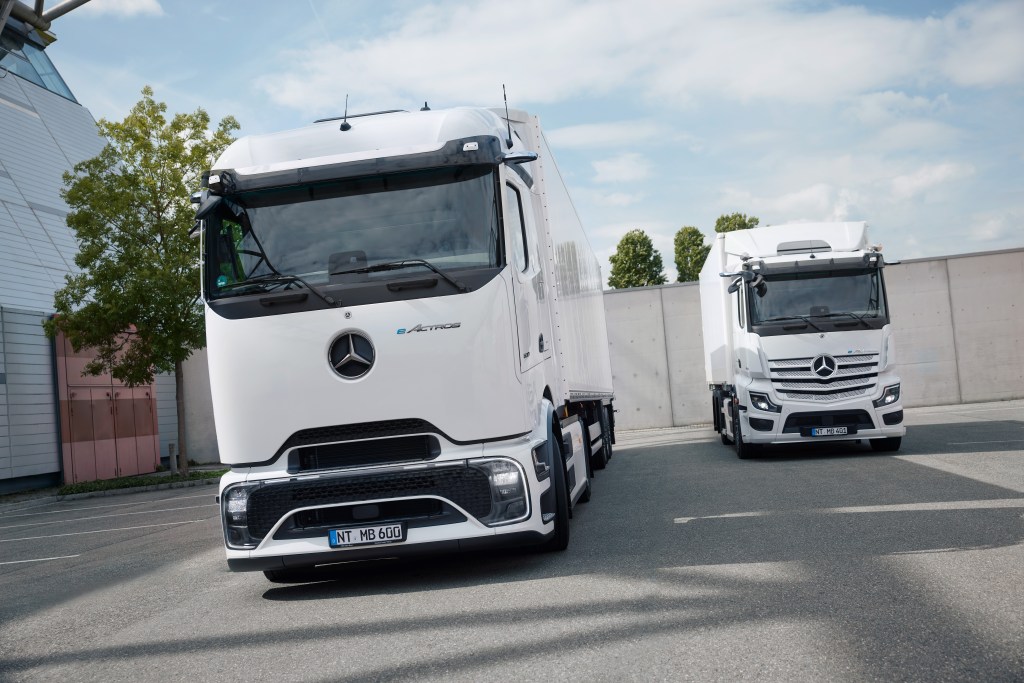
The road ahead
Today, the transport industry is entering another period of profound change. The drive to reduce emissions is reshaping vehicle technology, digitalisation is transforming the way fleets operate, and increasingly sophisticated driver assistance systems are changing the relationship between driver and truck. At the same time, alternative drivetrains are opening up new possibilities for the future of long-distance transport.
Once again, Actros is evolving with the industry.
The battery-electric eActros 600 represents a new chapter in that story, bringing the Actros name into the world of electric long-distance transport. It is a reminder that the truck first introduced in 1996 and the truck being developed for the roads of tomorrow may have very different technology underneath them, but they share the same fundamental purpose: to move goods, support businesses and help the people behind the wheel do their jobs safely and efficiently.
Thirty years is a long time in trucking. Think about how much has changed since 1996. Mobile phones became smartphones, paper maps gave way to digital navigation, fleets became connected and trucks became increasingly sophisticated computers on wheels. Safety technology evolved from systems designed primarily to protect occupants into technologies that can actively support the driver in avoiding potential hazards.
And through all of that change, the road itself remained the constant.
There is still nothing quite like climbing into the cab, starting the truck and heading out into the morning. The technology may have changed dramatically, but the responsibility hasn’t. Neither has the pride.
For three decades, Actros has been part of the working lives of professional drivers across Europe and beyond. It has been a workplace, a tool, a partner and, for many, a familiar presence on the road. Its history is therefore not simply a history of engineering. It is a history of the people who have relied on that engineering to keep moving.
So perhaps the best way to celebrate 30 years of Actros isn’t simply to look at where the truck has been, but to look at where it is going.
Because Actros has never been about standing still. It has always been about the next journey, the next delivery and the next idea that can make life on the road a little safer, smarter and better.
Thirty years ago, Mercedes-Benz Trucks asked what the heavy truck of the future could look like. Three decades later, the question remains the same.
What comes next?
Whatever the answer, one thing is certain. The road will keep moving, and so will Actros.
30 years. Millions of miles. One continuing story.
To the engineers who imagined what was next, to the operators who put innovation to work, and above all to the professional drivers who have put millions of miles behind the name: thank you for the miles.
Here’s to 30 years of Actros and to every mile still to come.
More Information: Mercedes-Benz Trucks