
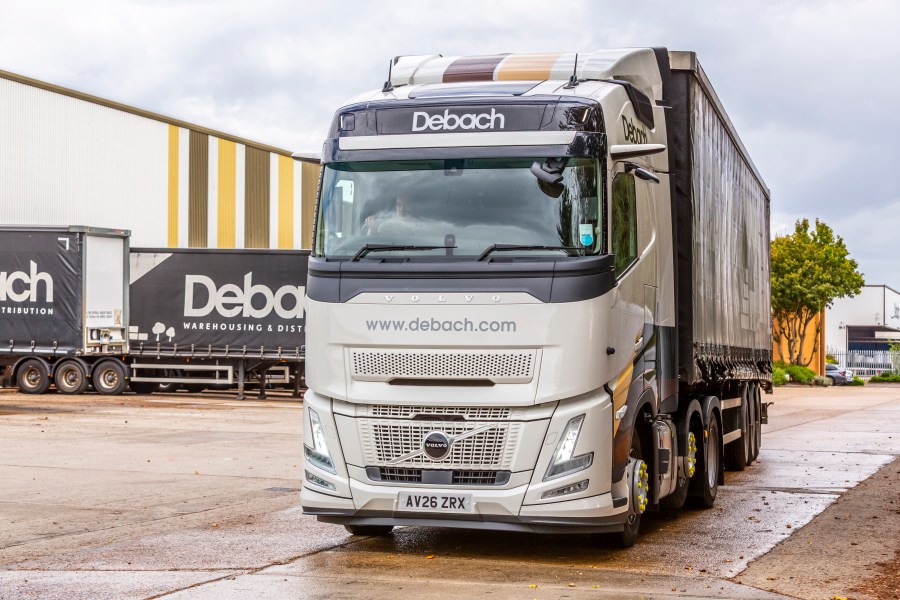
Debach has marked its 50th anniversary with two Volvo FH Aero 460 6×2 tractor units, with another pair due in early 2027.
The Ipswich-based warehousing and distribution business will use the trucks on UK-wide distribution work. They replace older Volvo FH models in its 24-strong commercial vehicle fleet, which comprises mainly Volvo vehicles.
Matt Kubot, transport solutions executive at Volvo Truck and Bus Centre South & East, supplied the tractors.
Both carry anniversary liveries and specifications aimed at reducing fuel consumption while providing a comfortable working environment.
Natalie Fraser, resources manager at Debach, said: “Volvo Trucks has been a part of our business from the beginning and continues to be today.
“As we mark our 50th year in business, these new FH Aero tractor units are a fantastic addition to our fleet.”
Fuel efficiency drives purchasing decision
The new Volvo FH Aero tractors will typically operate five days a week, covering up to 150,000km annually.
One will also handle a nightly trunking operation to the Palletforce hub in Burton upon Trent, running five nights a week.
That combination of distribution and trunking work makes fuel consumption an important consideration for the business.
“With the amount of mileage our drivers cover each week, fuel efficiency was a key factor in our decision to go with the FH Aero,” said Fraser.
“We’re confident that the aerodynamic design will offer us the performance and fuel savings we’re looking for, while also providing a comfortable environment for our drivers to work in.”
Debach has not yet reported fuel consumption figures for the new trucks. Its purchasing decision reflects the expected benefits of the aerodynamic design and latest driveline technology.
Turbo-compound engines and I-Shift
Each tractor features a Euro VI-compliant D13TC Step E engine producing up to 460hp and peak torque of 2,600Nm.
Turbo-compounding recovers energy from exhaust gases and converts it into additional mechanical drive. An extra turbine downstream of the turbocharger transfers that recovered energy to the crankshaft.
Volvo’s 12-speed I-Shift automated gearbox and I-See predictive cruise control complete the driveline specification.
I-See uses information about the road ahead to help manage speed and gear selection across changing gradients.
The trucks also feature rear air suspension and Globetrotter cabs, reflecting their intended use on regular national distribution routes.
Drivers respond positively to camera mirrors
Debach has specified Volvo’s Camera Monitoring System, replacing conventional exterior mirrors with cameras and in-cab displays.
The smaller exterior camera units support the truck’s aerodynamic performance. Volvo also says the system improves visibility in rain, darkness, direct sunlight and tunnels.
For Debach, the vehicles introduce camera mirrors to the fleet for the first time.
“The CMS was something totally new for us, as we’ve never run vehicles with digital mirrors before,” said Fraser.
“Whenever you introduce new technologies, there’s obviously a bit of apprehension, but the feedback we’ve had from our drivers has actually been very positive.”
Inside, both cabs feature leather upholstery, dual armrests, bottle holders and additional storage. A 33-litre fridge/freezer accompanies a full media and navigation package.
Debach expects to retain the tractors for at least four years. Both have full Volvo Gold Contracts to support maintenance and vehicle availability.
Five decades of Suffolk logistics
Debach began in 1976 as a privately owned business with agricultural roots. It has since developed into a warehousing and distribution operator serving customers across the UK.
Its Suffolk locations include Ipswich and Clopton Airfield, with services covering storage, stock management, fulfilment, distribution and port shunts.
The business operates close to the Port of Felixstowe, supporting its combination of warehousing and transport services.
The Volvo FH Aero replacements renew part of that operation during its anniversary year. The further two tractors expected in early 2027 will continue the fleet update.
More Information:
- Debach: debach.com
- Volvo Trucks: www.volvotrucks.co.uk
- Volvo Truck and Bus Centre South & East: Official dealer website
- Palletforce: www.palletforce.com
For more like this visit the Trucking Magazine website, or subscribe to Trucking Magazine here.