
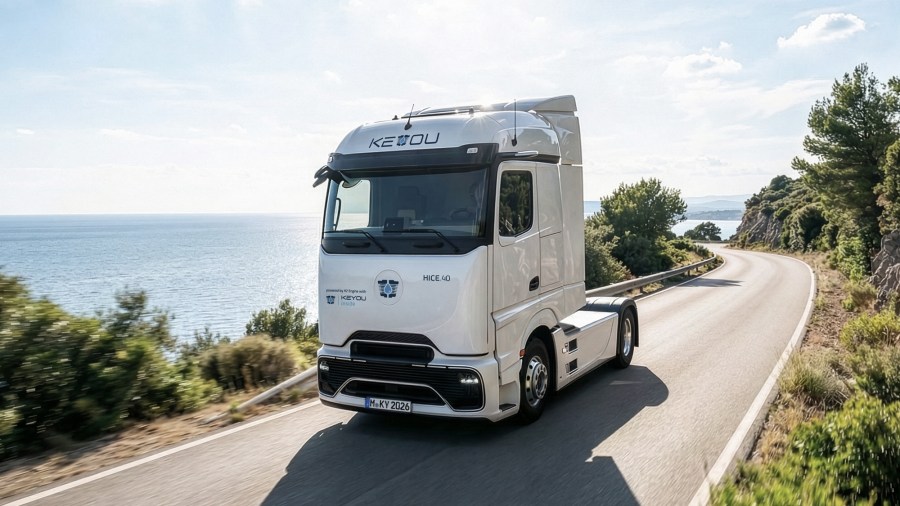
Daimler Truck has signed a partnership agreement with hydrogen technology specialist KEYOU to bring a new hydrogen-combustion truck to market starting in 2027.
The collaboration will see Daimler Truck supply Mercedes-Benz Actros L 1848 tractor units and OM 471 engines, which KEYOU will convert to run on hydrogen. The resulting vehicle, known as the KEYOU HICE.40, is expected to enter customer service during the fourth quarter of 2027.
The agreement expands Daimler Truck’s decarbonisation strategy, which already includes battery-electric and hydrogen fuel cell technologies. The company believes hydrogen internal combustion engines can offer another route to reducing emissions in applications where payload, range and operational flexibility remain key requirements.
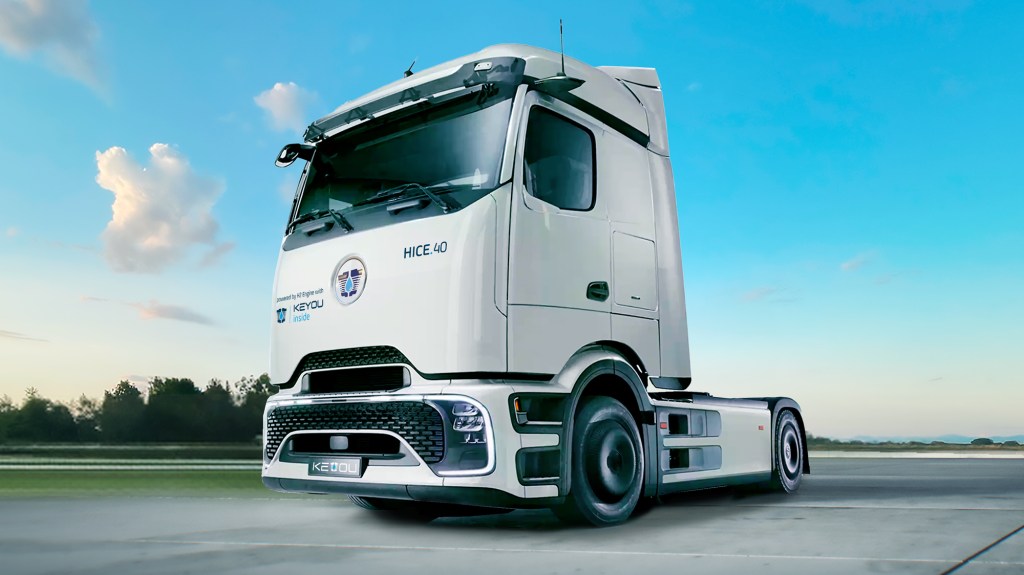
Based on proven Actros technology
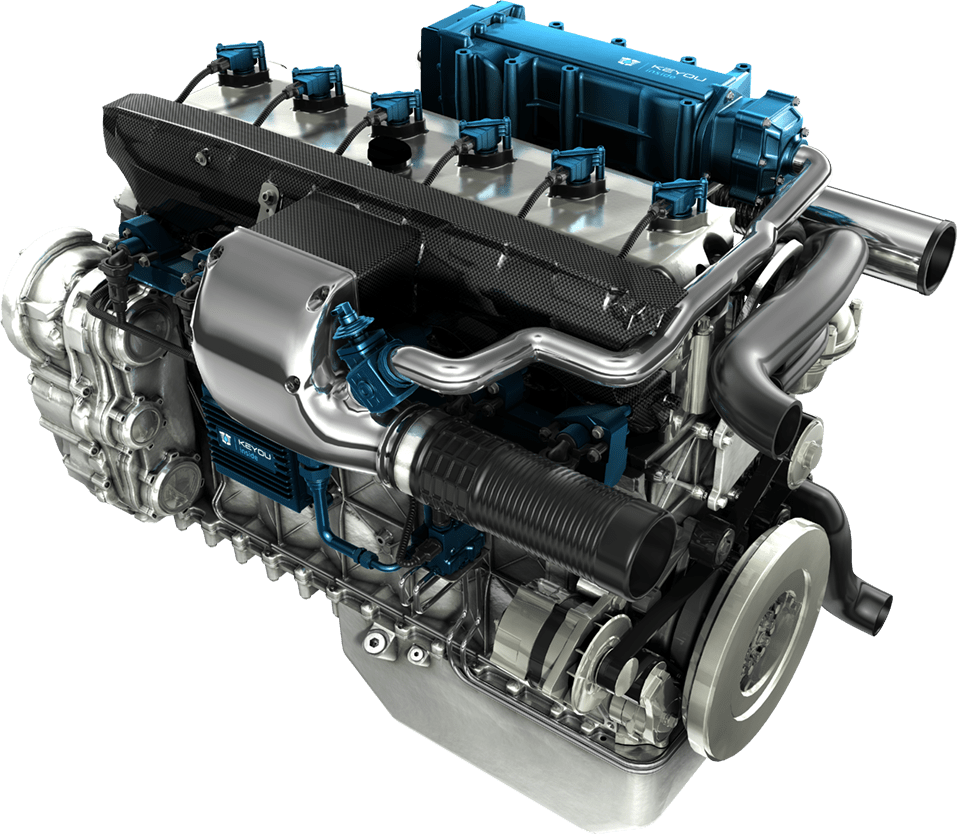
The first hydrogen combustion truck developed under the partnership will be based on the Mercedes-Benz Actros platform and use a modified version of the existing 12.8-litre OM 471 engine.
KEYOU says the vehicle will offer up to 350kW of power and a range of up to 650km using 350-bar compressed hydrogen storage. The company’s technology converts conventional diesel engine platforms to operate on hydrogen while retaining much of the original engine architecture. According to KEYOU, around 80% of the base engine remains unchanged.
Andreas Gorbach, Member of the Board of Management at Daimler Truck responsible for Truck Technology, said: “The road freight transport sector requires different drive solutions for different applications. Hydrogen can be used to power both fuel cells and internal combustion engines.”
He added: “By working with KEYOU, we are partnering with a specialised company to bring hydrogen combustion technology to market quickly and efficiently.”
KEYOU CEO and co-founder Thomas Korn described the agreement as an important step towards scaling hydrogen-powered commercial vehicles.
The companies also plan to explore how existing service and maintenance networks can support future operators of the new vehicles.
Daimler Truck said hydrogen combustion engines offer advantages including lower system complexity than fuel cells, compatibility with existing vehicle architectures and suitability for high-payload applications. The manufacturer sees the technology as a complement to battery-electric trucks and hydrogen fuel cell vehicles rather than a replacement for either solution.
If the project progresses as planned, Daimler Truck and KEYOU expect hydrogen combustion trucks to enter the market in larger volumes from the end of 2027.
More Information:
KEYOU – www.keyou.de
Daimler Truck – www.daimlertruck.com
For more like this visit the Trucking Magazine website (https://truckingmag.co.uk), or subscribe to Trucking Magazine here (https://shop.kelsey.co.uk/trucking-magazine).